
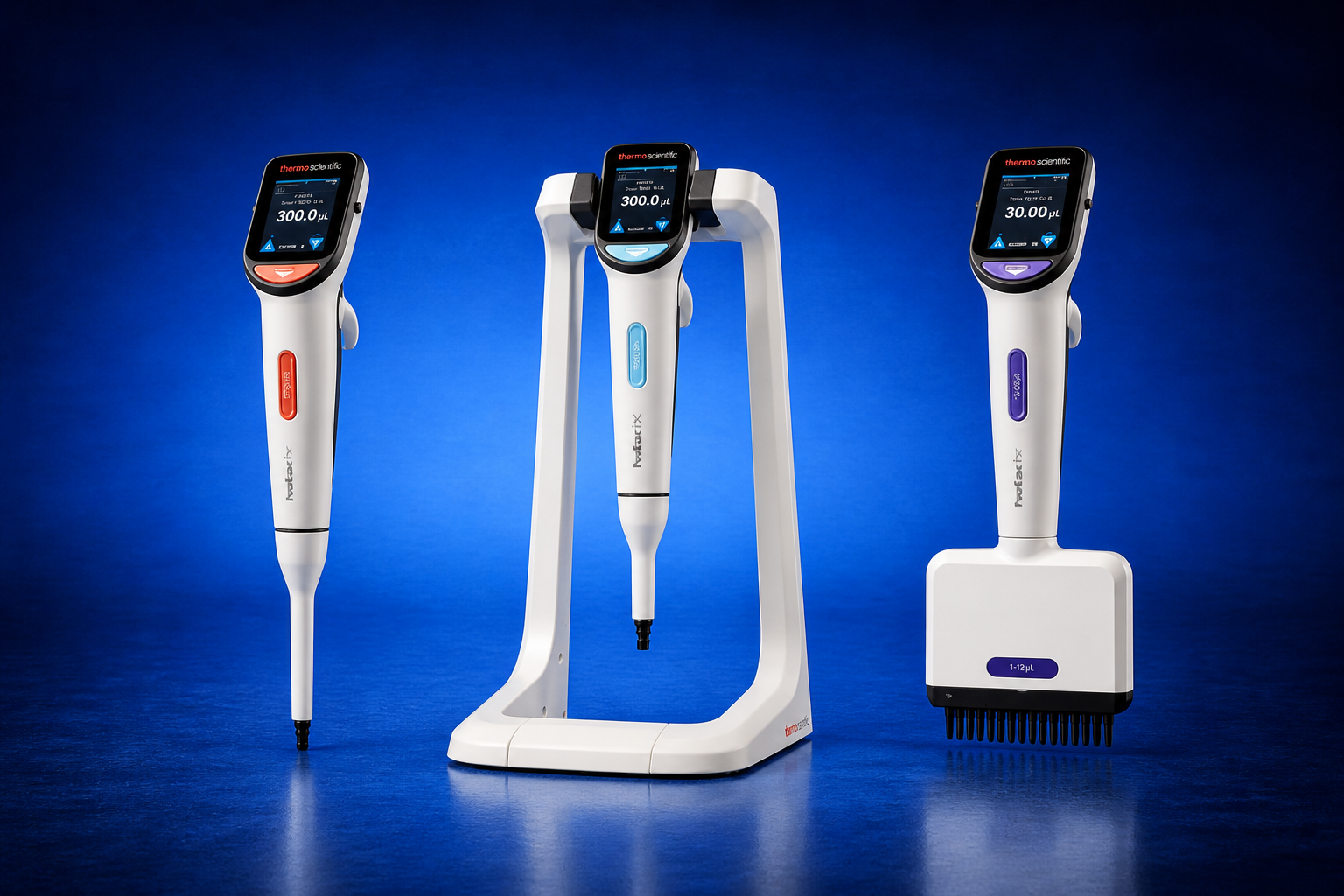
Pipette Products for Precision Liquid Handling

Pipette products control microliter liquid handling through air- or positive-displacement mechanisms. Pistons generate vacuum for aspiration and dispensing. Tip fit and calibration affect volume accuracy. These variables determine precision, repeatability, and contamination control in workflows.
READ MORE

Pipette Products

View as Grid List

3 Items

Set Descending Direction
per page

Frequently Asked Questions

How does a pipette work for precise liquid handling?
Air-displacement pipettes use an air cushion between the piston and liquid, making them suitable for aqueous solutions. Positive-displacement pipettes eliminate the air interface, improving accuracy with viscous or volatile liquids. The choice depends on sample properties and required precision in measurement.
What’s the difference between air-displacement and positive-displacement pipettes??
Air-displacement pipettes use an air cushion between the piston and liquid, making them suitable for aqueous solutions. Positive-displacement pipettes eliminate the air interface, improving accuracy with viscous or volatile liquids. The choice depends on sample properties and required precision in measurement.
Are pipette tips interchangeable between different brands?
Some pipette tips are designed as universal, but compatibility can vary due to differences in tip geometry and sealing surfaces. Poor fit can affect accuracy and lead to leakage or inconsistent volumes. Using manufacturer-recommended tips ensures proper sealing and reliable performance.
How often should pipettes be calibrated?
Pipettes should be calibrated regularly based on usage frequency and regulatory requirements, typically every 3–6 months. Calibration verifies volume accuracy and identifies wear in internal components. Routine calibration ensures consistent performance and compliance in analytical and regulated environments.
What factors affect pipetting accuracy and precision?
Accuracy depends on calibration, proper technique, tip quality, and environmental conditions such as temperature. Air bubbles, inconsistent aspiration speed, or improper tip fit can introduce errors. Standardized technique and maintenance are critical for achieving reliable and reproducible results.