
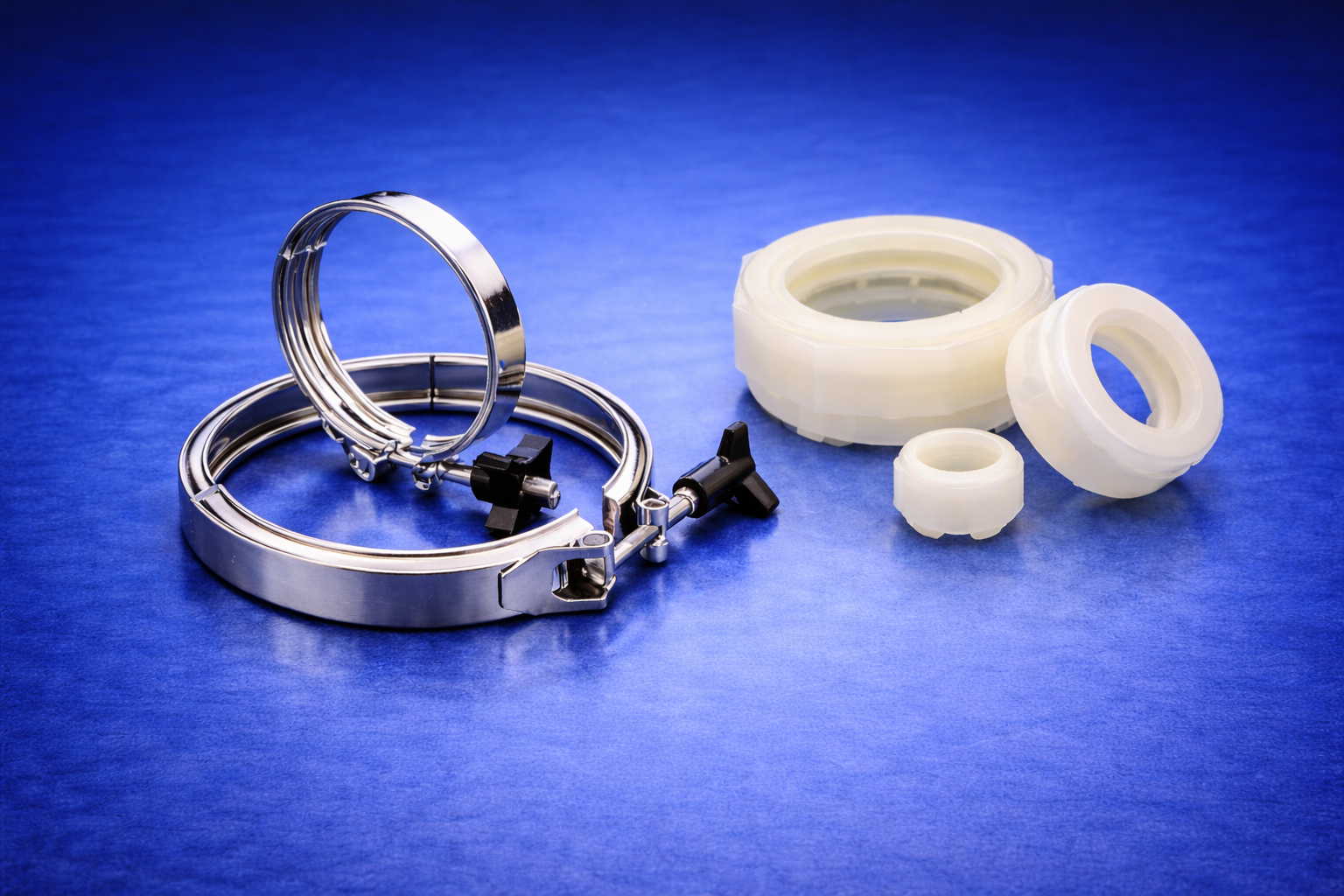
Clamps and Supports

Frequently Asked Questions
How do laboratory clamps and supports improve experimental safety?
Clamps and supports secure equipment in fixed positions, reducing the risk of movement, tipping, or accidental contact during experiments. This is especially important when working with heated apparatus or reactive chemicals. By stabilizing glassware and instruments, they help prevent spills, breakage, and exposure hazards, contributing to safer laboratory operations.
What is the difference between a retort stand and a clamp holder?
A retort stand is the base structure that provides vertical support for laboratory setups, while a clamp holder is a connector used to attach clamps to the stand. The stand provides stability, and the holder allows adjustable positioning of clamps. Together, they form a modular system for securing various types of equipment.
Are clamps compatible with all types of laboratory glassware?
Most clamps are designed to accommodate a range of standard glassware sizes, but compatibility depends on the clamp type and adjustability. Some clamps are specialized for specific equipment, such as burettes or condensers. It is important to select clamps that provide a secure fit without applying excessive pressure that could damage the glass.
How should clamps and supports be maintained for long-term use?
Maintenance includes regular inspection for corrosion, wear, or loose components. Contact surfaces should be cleaned to remove chemical residues, and moving parts should be checked for smooth operation. Proper storage in dry conditions helps prevent degradation and ensures reliable performance over time.
What types of experiments require clamp and support systems?
Clamp and support systems are used in a wide range of experiments, including titration, distillation, filtration, and heating procedures. They are essential whenever equipment must be held in a fixed position or aligned precisely. Their use ensures consistent setup and reproducibility across different experimental conditions.