
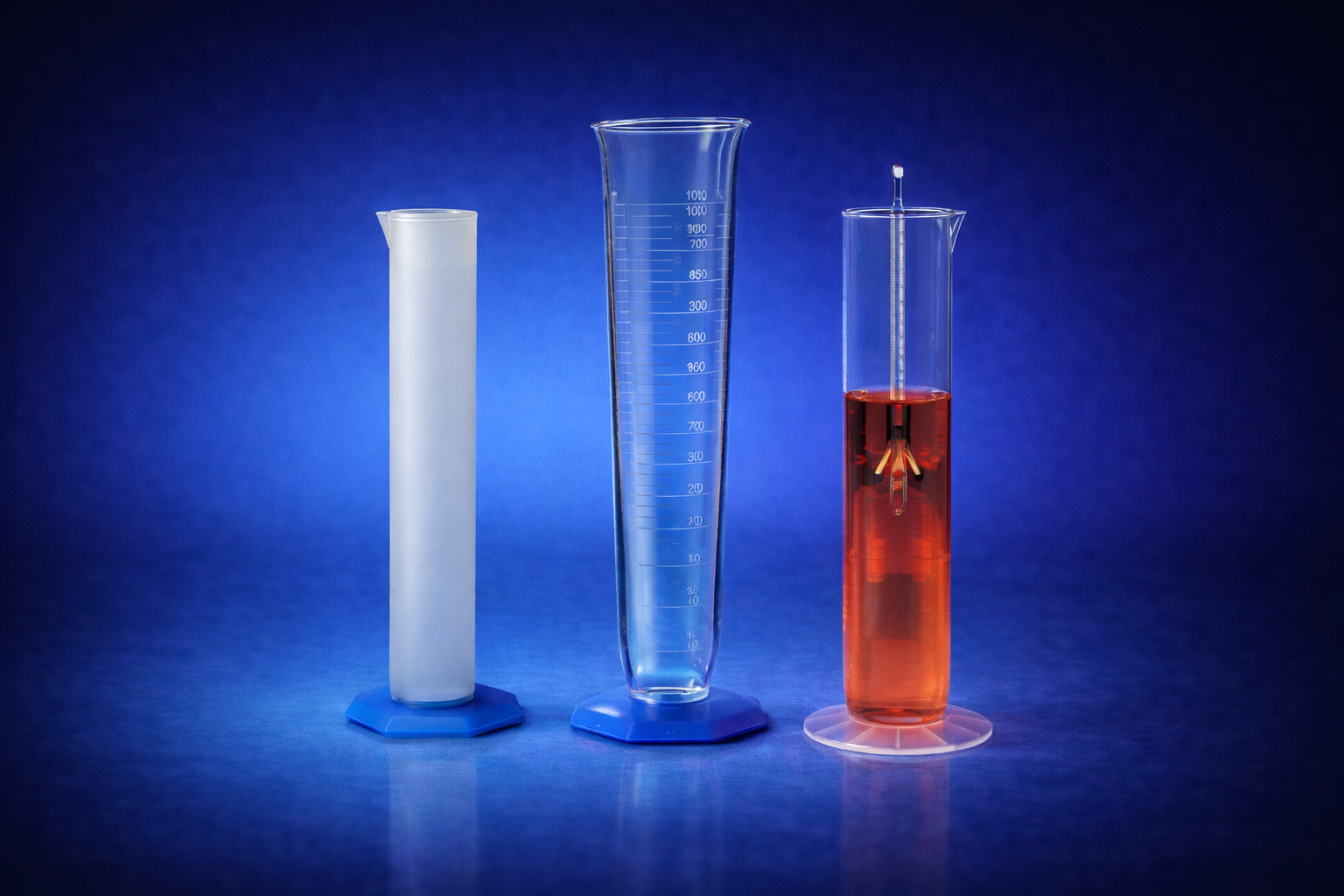
Cylinders
-

-

-

-

-
 Nalgene™ Double-Scale PMP Pharmaceutical GraduatesAs low as $369.46


Frequently Asked Questions
How does a graduated cylinder work for measuring liquids?
A graduated cylinder measures liquid volume using calibrated markings along its side. The user reads the liquid level at the bottom of the meniscus to determine volume. Its narrow shape improves accuracy compared to wider vessels. This design allows consistent and repeatable measurements in laboratory workflows involving liquid handling and preparation.
What’s the difference between a graduated cylinder and a beaker?
A graduated cylinder is designed for more accurate volume measurement, with narrow geometry and finer graduations. A beaker is used primarily for mixing and heating, offering only approximate volume readings. Cylinders provide better precision, while beakers prioritize ease of handling and versatility in general laboratory tasks.
Is a plastic graduated cylinder compatible with chemical solutions?
Plastic graduated cylinders, often made from polypropylene, are compatible with many aqueous solutions, acids, and bases. However, some organic solvents may degrade the material or cause swelling. Chemical compatibility should always be verified before use to prevent contamination or damage to the cylinder.
How do you properly read measurements on a graduated cylinder?
Measurements should be read at eye level from the bottom of the meniscus to avoid parallax error. A consistent viewing angle ensures accurate readings. Proper lighting and a clear background can help improve visibility, which is important for maintaining measurement precision in laboratory work.
What size graduated cylinder should I use for my application?
The cylinder size should closely match the volume being measured to maximize accuracy. Using a cylinder that is too large reduces precision due to wider graduation spacing. Selecting the smallest cylinder that accommodates the required volume improves readability and measurement consistency.