
Cryogenic Storage
-
-

-
-
-
-
-
-

-
-

-

-

-
 Accessories for BioCane™ Canister and Cane SystemsAs low as $166.88
 -

-

-
-

-
-
-



Frequently Asked Questions
What are the differences between vapor phase and liquid phase cryogenic storage?
Vapor phase storage maintains samples above liquid nitrogen, typically at temperatures around -150°C, reducing the risk of cross-contamination between samples. Liquid phase storage immerses samples directly in LN2 at approximately -196°C, offering lower temperatures but increasing contamination and handling considerations. Selection depends on sample sensitivity and contamination risk tolerance.
How does evaporation rate impact liquid nitrogen storage performance?
Evaporation rate determines how quickly liquid nitrogen is depleted from a storage vessel, directly affecting holding time and refill frequency. Lower evaporation rates improve operational efficiency and reduce maintenance requirements. Factors influencing evaporation include insulation quality, vessel design, and frequency of lid opening.
What factors should be considered when selecting cryovials for long-term storage?
Cryovial selection depends on material compatibility with ultra-low temperatures, seal integrity, and resistance to cracking under thermal stress. External versus internal threading can influence contamination risk, while volume capacity and labeling compatibility affect sample organization. Certification for cryogenic use is critical to ensure reliability.
Why is temperature uniformity important in cryogenic freezers?
Temperature uniformity ensures that all stored samples experience consistent conditions, preventing localized warming that can compromise sample viability. Variations within the chamber may lead to partial thawing or degradation. Systems with validated uniformity profiles are typically preferred for sensitive biological materials.
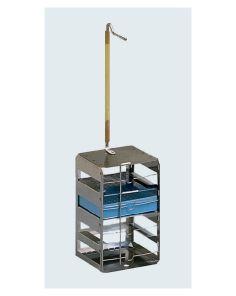
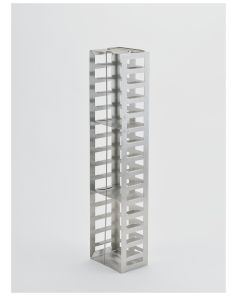
How do storage racks improve cryogenic system efficiency?
Storage racks provide structured organization, enabling consistent sample placement and reducing retrieval time. This minimizes exposure to ambient temperatures during access, helping maintain stable internal conditions. Proper rack configuration also maximizes usable storage volume within tanks or freezers.