
Beakers and Lids





Frequently Asked Questions
How does a laboratory beaker differ from other types of lab glassware?
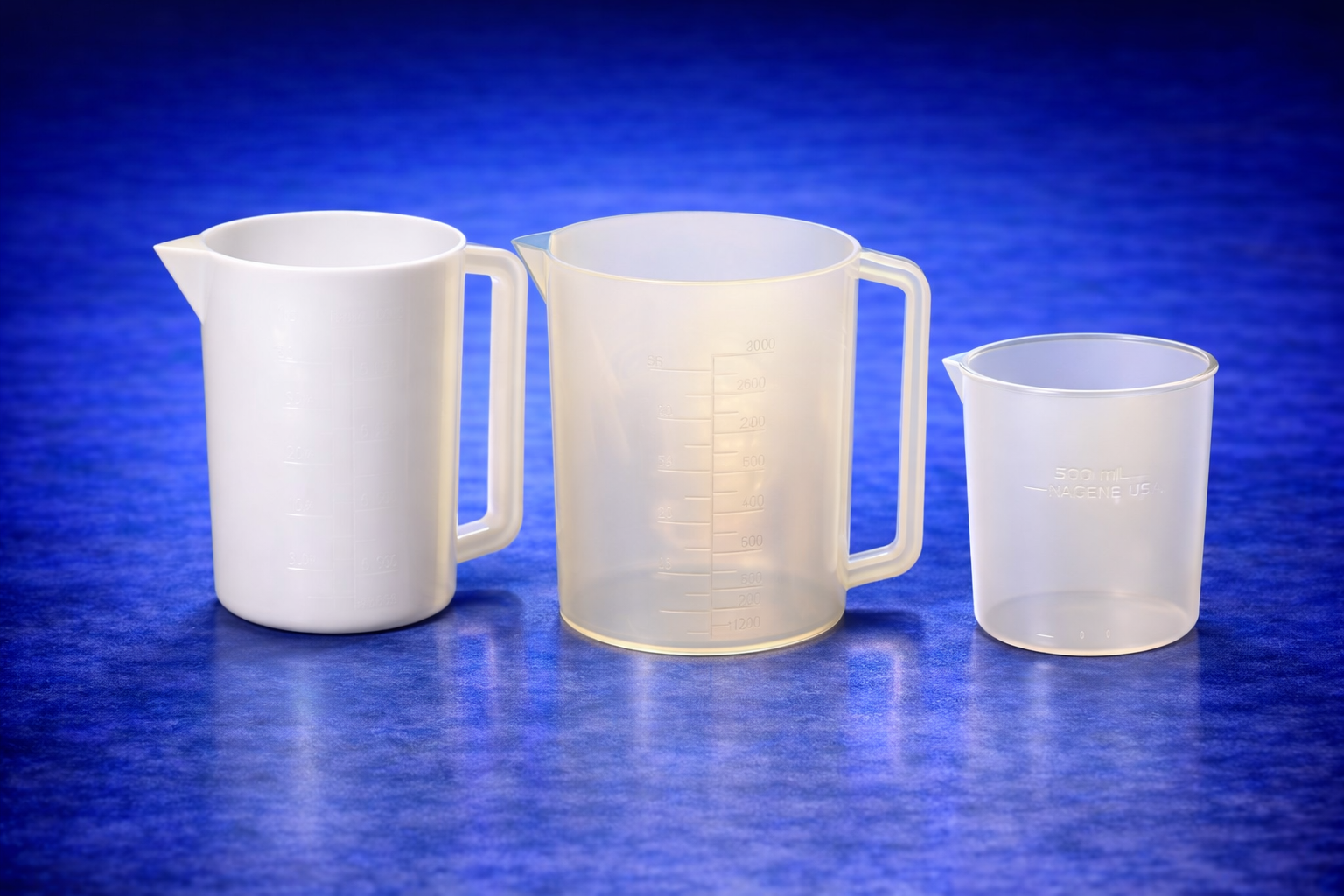
A laboratory beaker is designed for general-purpose use, including mixing, heating, and transferring liquids, rather than precise measurement. Unlike volumetric flasks or graduated cylinders, beakers have wide openings and approximate graduations. Their design prioritizes ease of handling and versatility, making them suitable for a broad range of routine laboratory tasks rather than analytical accuracy.
Is a plastic beaker compatible with strong acids and solvents?
Compatibility depends on the specific polymer used. Polypropylene beakers offer good resistance to many acids and bases but may not be suitable for strong organic solvents or oxidizing agents. Chemical compatibility charts should be consulted to ensure safe use, as certain reagents can cause swelling, degradation, or leaching in plastic materials.
What is the difference between borosilicate glass and regular glass beakers?
Borosilicate glass beakers are engineered for enhanced thermal and chemical resistance compared to standard soda-lime glass. They can withstand rapid temperature changes and direct heating without cracking, making them suitable for laboratory use. Regular glass lacks this thermal stability and is more prone to breakage under heat or chemical stress.
How do beaker lids help maintain sample integrity during experiments?
Beaker lids reduce exposure to airborne contaminants and limit evaporation, particularly during heating or extended processing. This helps maintain concentration consistency and minimizes variability between samples. While not fully sealed, lids provide a controlled environment that supports more reproducible experimental conditions in routine workflows.
What should I consider when selecting the right beaker size?
Beaker size selection depends on the working volume and the need for headspace during mixing or heating. It is typically recommended to use a beaker with a capacity at least 20–30% greater than the intended volume to prevent overflow. Larger sizes may also improve mixing efficiency and reduce the risk of spillage.