
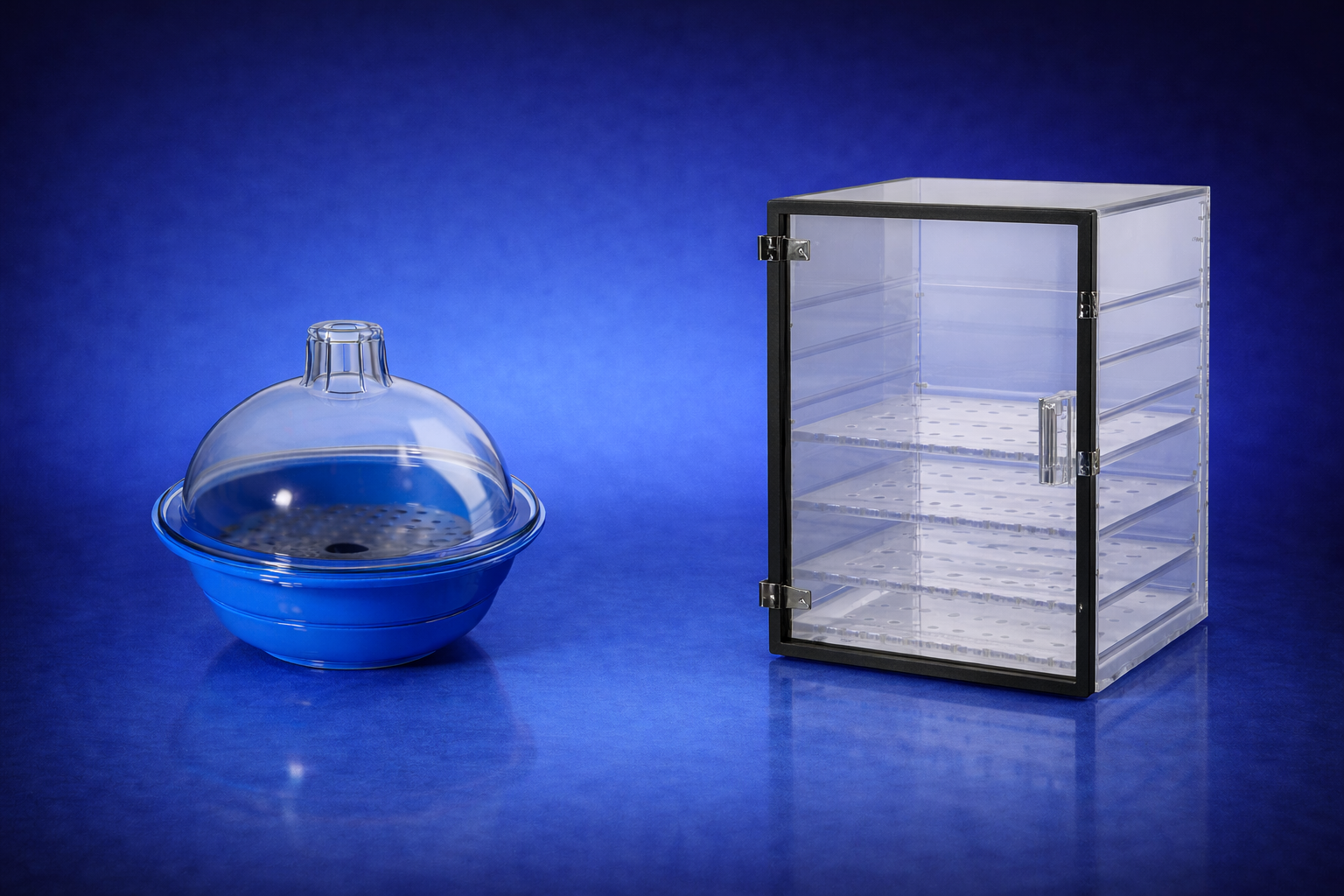
Desiccators



Frequently Asked Questions
How does a desiccator work to remove moisture from samples?
A desiccator works by creating a sealed, low-humidity environment using a desiccant material such as silica gel or calcium sulfate. The desiccant absorbs moisture from the air inside the chamber, reducing humidity levels. This helps prevent water absorption by samples and supports drying processes for materials that are sensitive to moisture.
What is the difference between a vacuum desiccator and a standard desiccator?
A standard desiccator relies on passive moisture absorption using desiccants, while a vacuum desiccator uses reduced pressure to accelerate moisture removal. Vacuum systems enhance drying efficiency and are used for applications requiring faster or more controlled dehydration. The choice depends on drying speed and sensitivity of the material.
Is a desiccator necessary for storing hygroscopic chemicals?
Yes, desiccators are commonly used to store hygroscopic chemicals that readily absorb moisture from the air. Maintaining a low-humidity environment prevents chemical degradation and ensures stability. This is especially important for analytical reagents and compounds that require controlled storage conditions.
What types of desiccants are used in laboratory desiccators?
Common desiccants include silica gel, calcium sulfate, and molecular sieves, each offering different moisture absorption capacities. Some desiccants include color indicators to show saturation levels. Selection depends on the required drying efficiency and the sensitivity of the stored materials.
How often should desiccants be replaced or regenerated?
Desiccants should be replaced or regenerated when they reach saturation and can no longer effectively absorb moisture. Many desiccants include indicators that change color when saturated. Regeneration typically involves heating to remove absorbed moisture, depending on the desiccant type.