


LABORATORY FILTERS AND FILTRATION PRODUCTS

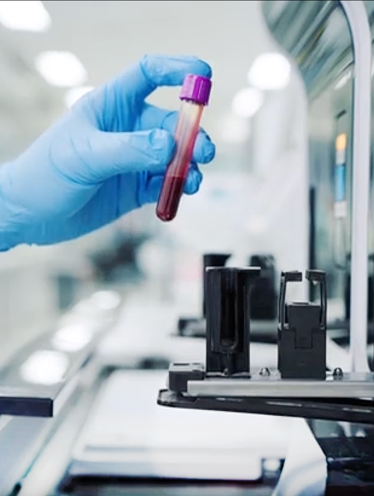
Filters and filtration systems separate particulates from liquids or gases using porous media and pressure differentials. Techniques include gravity, vacuum, and membrane filtration, each controlling flow and retention. Pore size and pressure govern separation efficiency. These factors determine clarity, sterility, and sample preparation accuracy.
READ MORE

Filters and Filtration

View as Grid List

Items 1-24 of 139

Set Descending Direction
  1. MAKE AN ACCOUNT

    Track your order history, save items, and more.

    LEARN MORE
  2. OFFICIAL THERMOFISHER SUPPLIER

    McQueen Labs is an authorized Thermo Fisher Scientific distributor, offering factory-direct lab equipment with full manufacturer warranties for trusted performance and reliability.

    As an official Thermo Fisher Scientific Independent Channel Partner, McQueen Labs delivers genuine Thermo Scientific products with expert support, ensuring quality and peace of mind for research and clinical laboratories.
    LEARN MORE
Page
per page

Frequently Asked Questions

How does laboratory filtration work in sample preparation?
Laboratory filtration works by passing a liquid or gas through a porous membrane that retains particles, microorganisms, or macromolecules. The driving force can be gravity, vacuum, or pressure, depending on the system used. This process is essential for clarifying samples, sterilizing solutions, and preparing materials for analytical testing.
What is the difference between membrane filters and inline filters?
Membrane filters are flat filtration media typically used in holders or integrated units, while inline filters are enclosed systems designed for continuous flow within tubing or pipelines. Inline filters are commonly used for larger volumes or automated processes, whereas membrane filters offer flexibility in custom setups.
Are syringe filters compatible with all types of solvents?
Compatibility depends on the membrane material used in the syringe filter. For example, PTFE membranes are suitable for organic solvents, while nylon or cellulose membranes are better suited for aqueous solutions. Selecting the correct membrane ensures chemical resistance and prevents degradation or sample contamination.
How do bottletop filters improve efficiency in the lab?
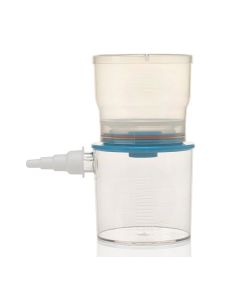
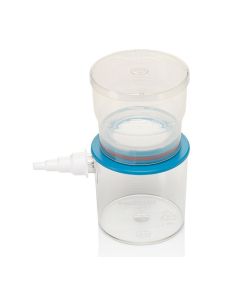
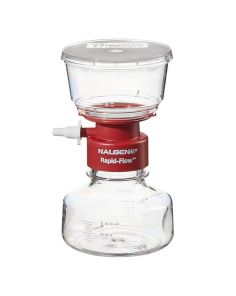
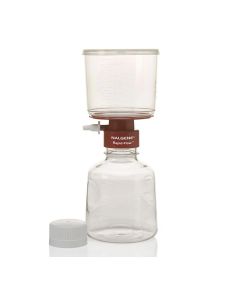
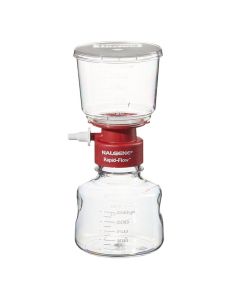
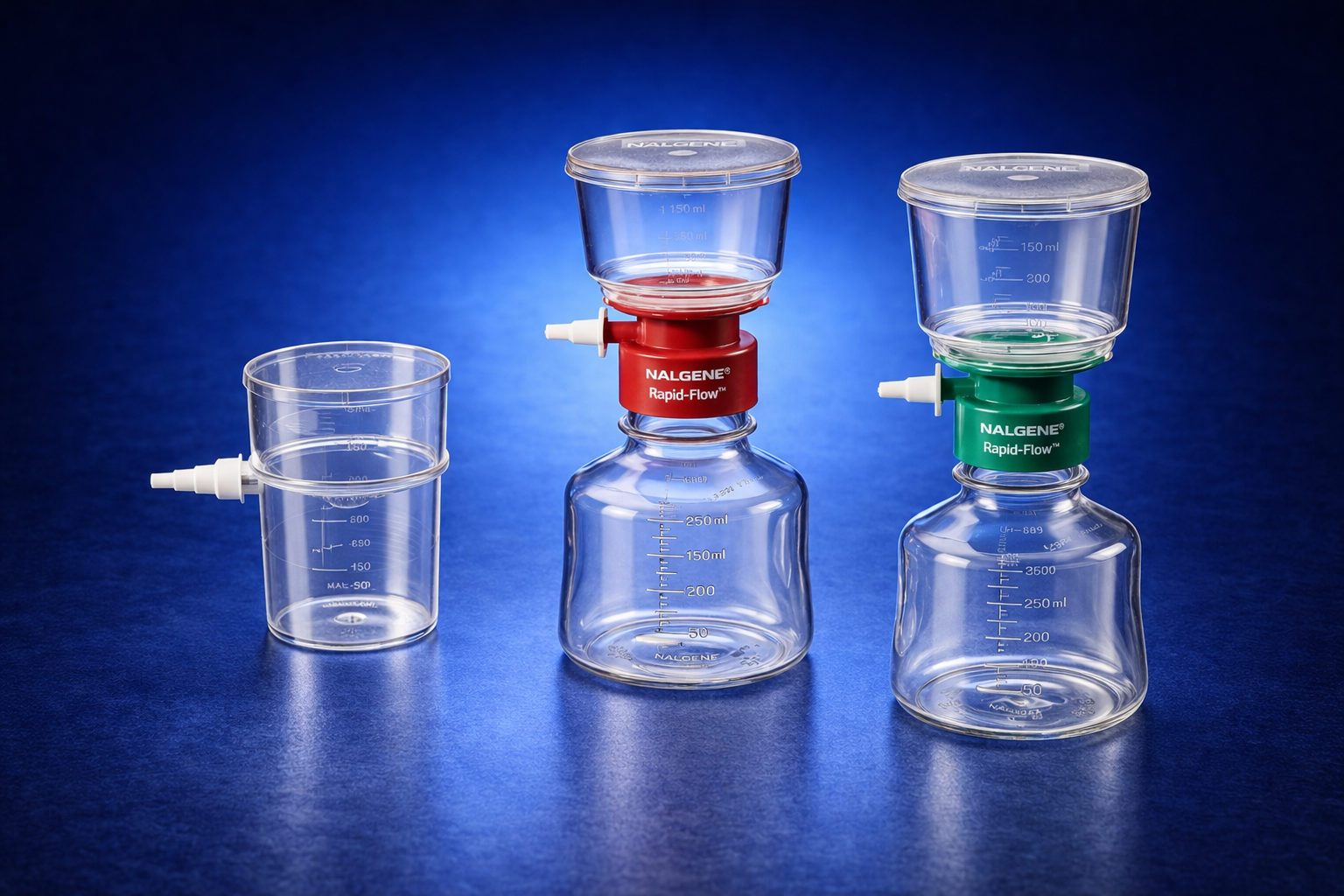
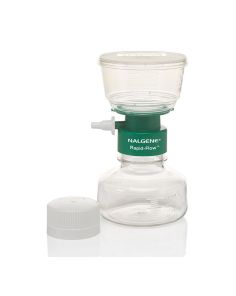
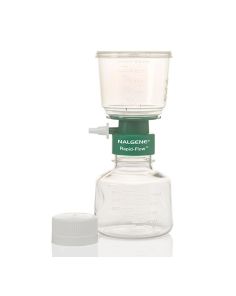
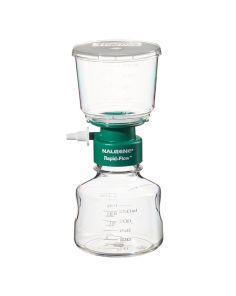
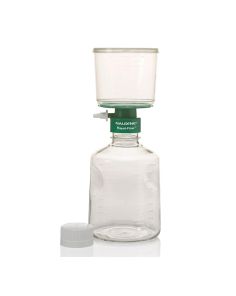
Bottletop filters allow rapid processing of larger liquid volumes using vacuum filtration. They integrate the membrane and collection container, reducing setup time and handling steps. This improves workflow efficiency and minimizes contamination risk during media preparation or sample clarification.
What pore size should be used for microbial filtration?
Pore sizes of approximately 0.2 to 0.45 micrometers are commonly used for microbial filtration, depending on the target organisms and application. Smaller pores provide higher retention of bacteria, while slightly larger pores may be used for general clarification. Selection should align with the required level of microbial control.